Insulation is a very effective way of improving living comfort as well as saving energy. It is critical in older buildings to make sure that the insulation material is breathable or permeable so it does not cause moisture build up problems especially if you live in a traditionally built home. Insulation specialists Bauwer have come across many damp and condensation issues due to impermeable materials being installed in older permeable buildings.
A typical example is where a client’s daughter bought a stone cottage. After some time she discovered moisture build up on the internal walls. Investigation discovered impermeable EPS insulated plasterboard, used as internal insulation against a solid stone wall. When warm and moist air was in contact with a colder insulated stone wall, condensation appeared.
As the number of similar stories increased, we decided to run an experiment by speaking to a number of architects at recent building exhibitions at Birmingham and Harrogate. We always asked the same question “I have a 150 year old stone wall cottage. What are my options in regard to the insulation of the walls?” We received several worrying answers advising us of modern impermeable insulation materials like EPS boards. When we asked about permeability of those petroleum-based modern materials or condensation risks, they were not able to answer our concerns. This situation triggered us to write this article. There is nothing wrong with using modern impermeable materials in modern construction; however it works differently in traditionally built permeable homes.
Most traditional buildings are made of permeable materials and do not incorporate the barriers to external moisture such as cavities, rain-screens, damp-proof courses, vapour barriers and membranes which are standard in modern construction. As a result, the permeable fabric in older buildings tends to absorb more moisture, which is then released by internal and external evaporation. When traditional buildings are working as they were designed to, the evaporation will keep dampness levels in the building fabric below the levels at which decay can start to develop. This is often referred to as a ‘breathing’ building.
Materials used for insulation and maintenance must be selected with care to preserve this permeability. In the case of your traditionally built house, it is important to remove any impermeable materials such as cement concrete off the walls to allow moisture to pass through freely.
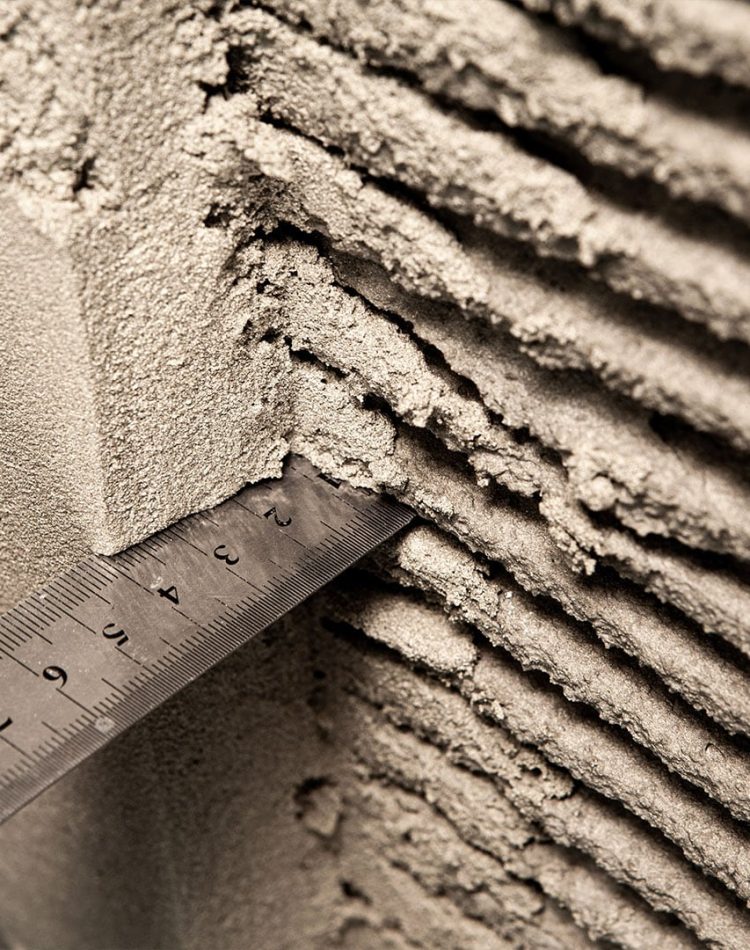
Lightweight, breathable thermal renders and plasters effectively control dampness passing through walls. Being ‘breathable’ means that the render allows balanced moisture movement through the construction fabric, allowing the substrate to dry naturally. Bauwer thermal render and plaster contain lightweight Perlite, which, along with reducing the density, improves the insulation properties of the solid wall. This low weight reduces the stresses put on structures. This is especially important when working on traditional and historical projects.
Bauwer renders and plasters regulate home humidity levels, absorbing and releasing moisture while improving overall comfort, thermal performance and maintaining the overall appearance of older homes. Bauwer insulation carries out multiple functions and creates a healthy and warm living environment, whilst also being ecologically sustainable and cost efficient. As the material is commonly applied inside, it also minimises any planning issues with listing status or conservation areas.
Confusion among the some architects in the example above also related to the targeted U value, with several architects advised us of 0.3 W/m2K as a target for solid wall insulation. When we asked why the target for the more advance and modern cavity walls insulation was only 0.55 W/m2K they again were not able to explain such a discrepancy. Looking at the building regulation L1B, part 5.12 (see below) we demonstrated that the U value of about 0.7W/m2K is about a three times improvement vs as-built and generally sufficient for the traditionally build stone or brick wall insulation which enables usage of permeable insulation materials.
- Get an instant bag estimate!
Use Our Online Calculator to see how many bags of thermal rendering you need!